Swan Suites

A Local Guide

Frank Lloyd Wright in Lakeland

A self-guided walking tour of the 13 Wright buildings at Florida Southern College

One block from Swan Suites sits the world's largest single-site collection of Frank Lloyd Wright architecture. Wright designed 18 structures for Florida Southern College's "Child of the Sun" campus between 1938 and 1958; 13 were built. The campus has been on the National Register of Historic Places since 1975.

You can walk the whole loop in about an hour. The map below starts at the northwest corner of campus (the intersection of Johnson Avenue and Frank Lloyd Wright Way, a one-minute walk from our front door) and threads the buildings in a roughly clockwise order so you end near the Usonian House and the visitor center.

The walking route

The ★ marks where to start. Orange line shows the suggested order; tap a numbered pin to read about each stop. 

The 13 Stops

Sharp Family Tourism & Education Center
1
Visitor Center (opened 2013)

Sharp Family Tourism & Education Center

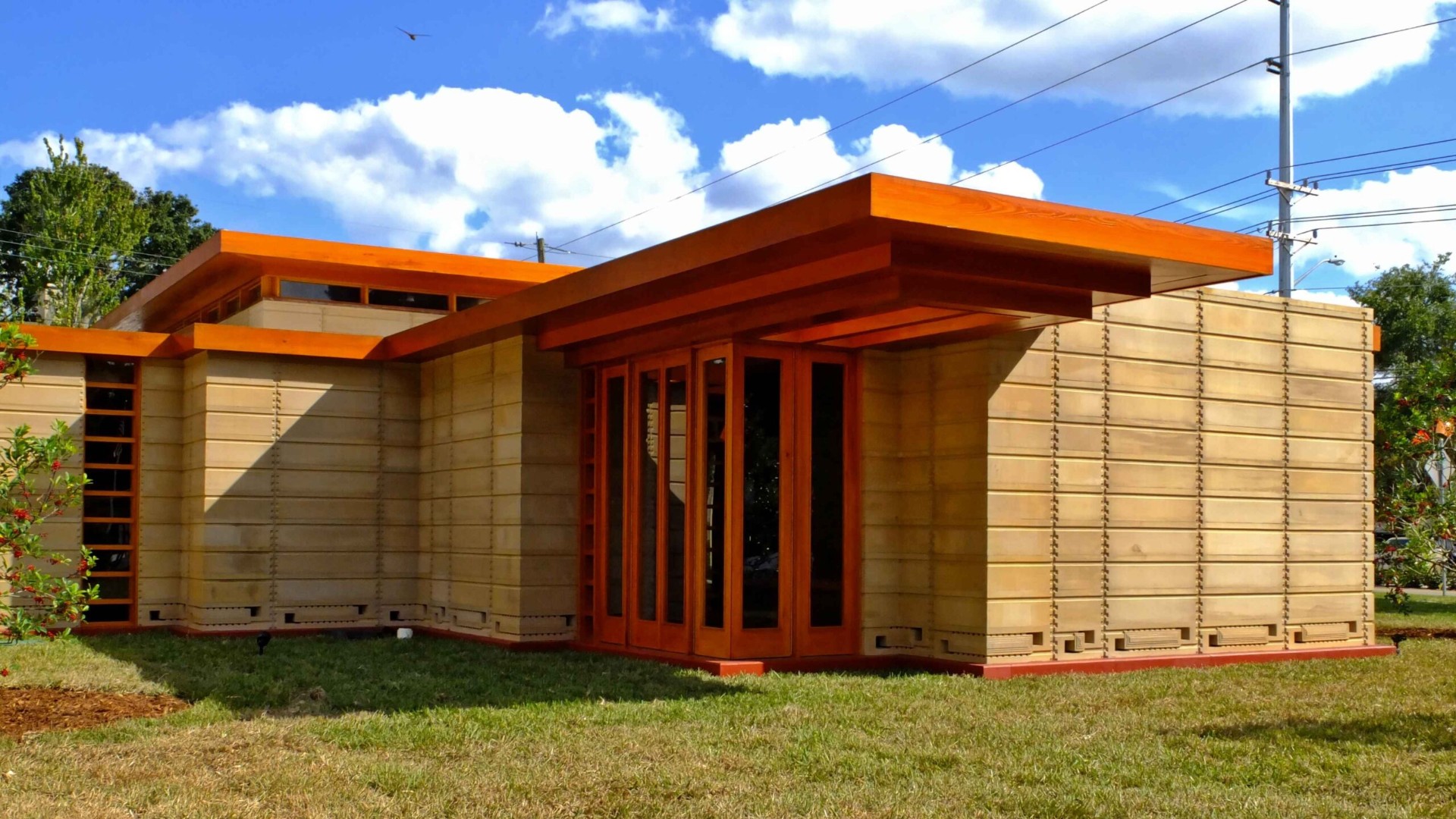
Start here: tickets, gift shop, and the only place to buy the $5 self-guided walking map. The center sits beside the long-unbuilt Usonian House Wright designed in 1939; FSC finally raised the money and completed it in 2013. Address: 750 Frank Lloyd Wright Way. Hours 9:30 AM–4:30 PM daily except Thanksgiving, Christmas, and New Year's.

Emile E. Watson / J. Edgar Wall (Fine) Administration Building
2
1945–1949

Emile E. Watson / J. Edgar Wall (Fine) Administration Building

Wright's original campus admin building. Cut-away skylights frame slices of the Florida sky from inside the hallways. Wright's master plan (based on his never-built Broadacre City) used an orange-grove grid as its underlying geometry, with esplanades replacing the rows between trees.

Water Dome
3
1948 (restored 2007)

Water Dome

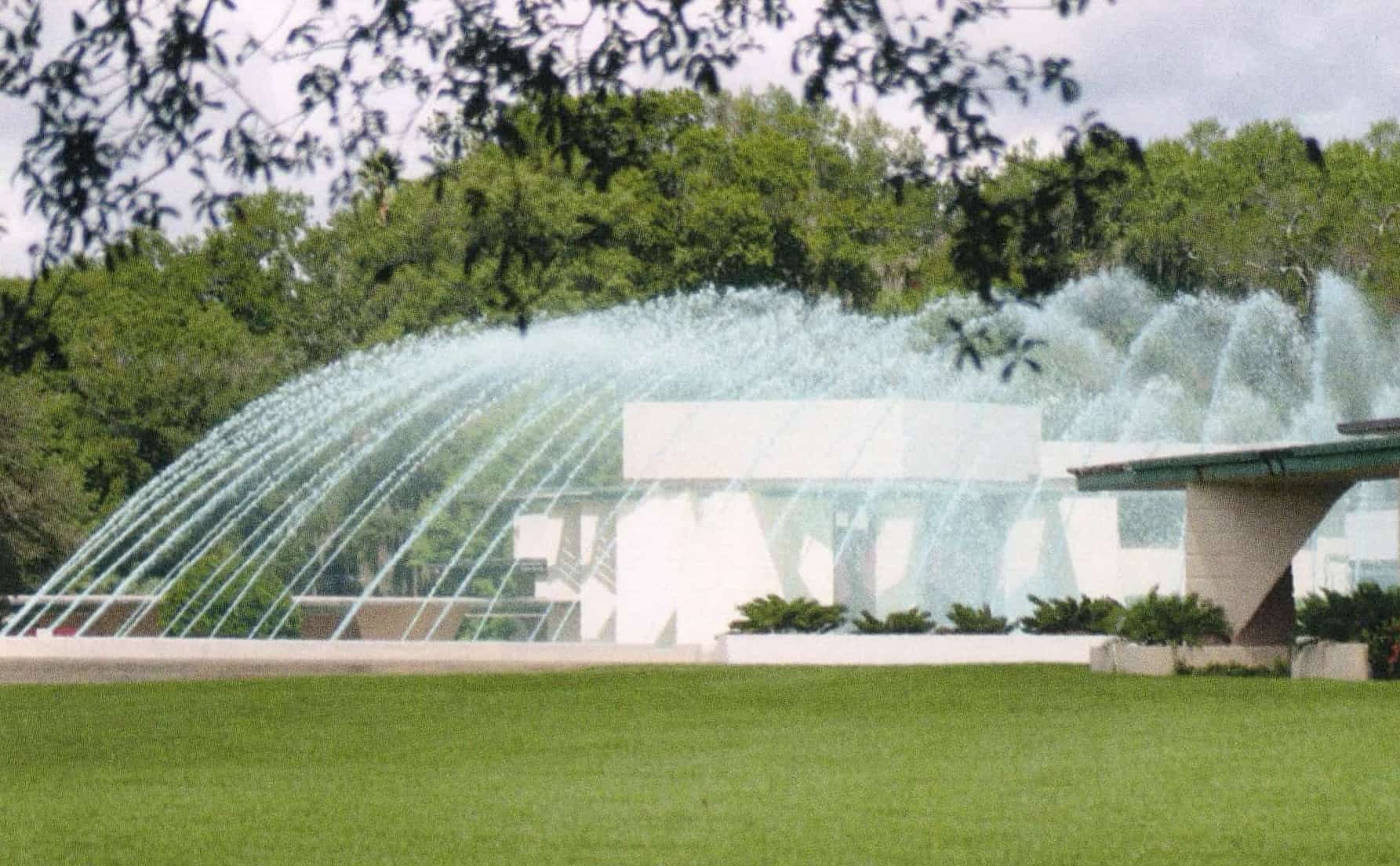
The geometric heart of the campus. Wright envisioned a 160-ft fountain whose jets would form a perfect dome of water... but 1948 pump technology couldn't manage it, and he never saw it work as designed. In 2007 FSC replaced the pumps with modern equipment that finally throws water 45 feet up. Runs on a posted schedule a few hours a day to conserve water; check before you go.

The Esplanades
4
1946–1958 (restoration ongoing)

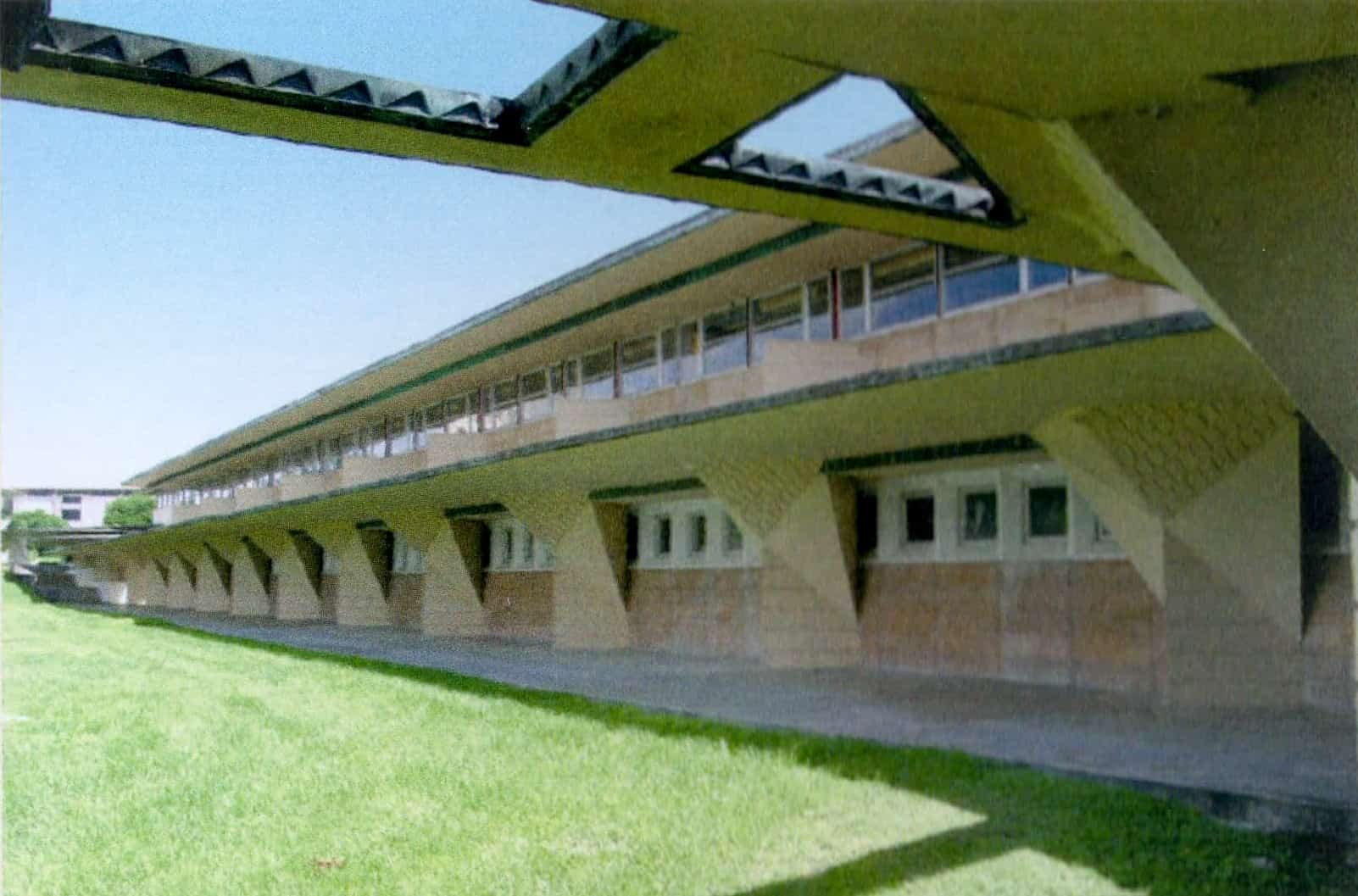
The Esplanades

1.5 miles of low, copper-trimmed covered walkways tying every building together — Wright's signature on the campus as a whole. He wanted students shaded from the Florida sun on every step between classes. Euclidean voids let sunlight in at sharp angles; restoration is a permanent project as 1940s concrete loses its battle with Florida humidity.

E.T. Roux Library (Thad Buckner Building)
5
1941–1945

E.T. Roux Library (Thad Buckner Building)

The original campus library, now the Buckner Building. Touring it is an exercise in imagining how it once looked... over the decades the airy reading rooms were chopped into offices to add usable space. The Wright-designed library chairs are notoriously uncomfortable; he must have believed students wouldn't fall asleep over their books.

Charles W. Hawkins Seminar Building
6
1940–1941

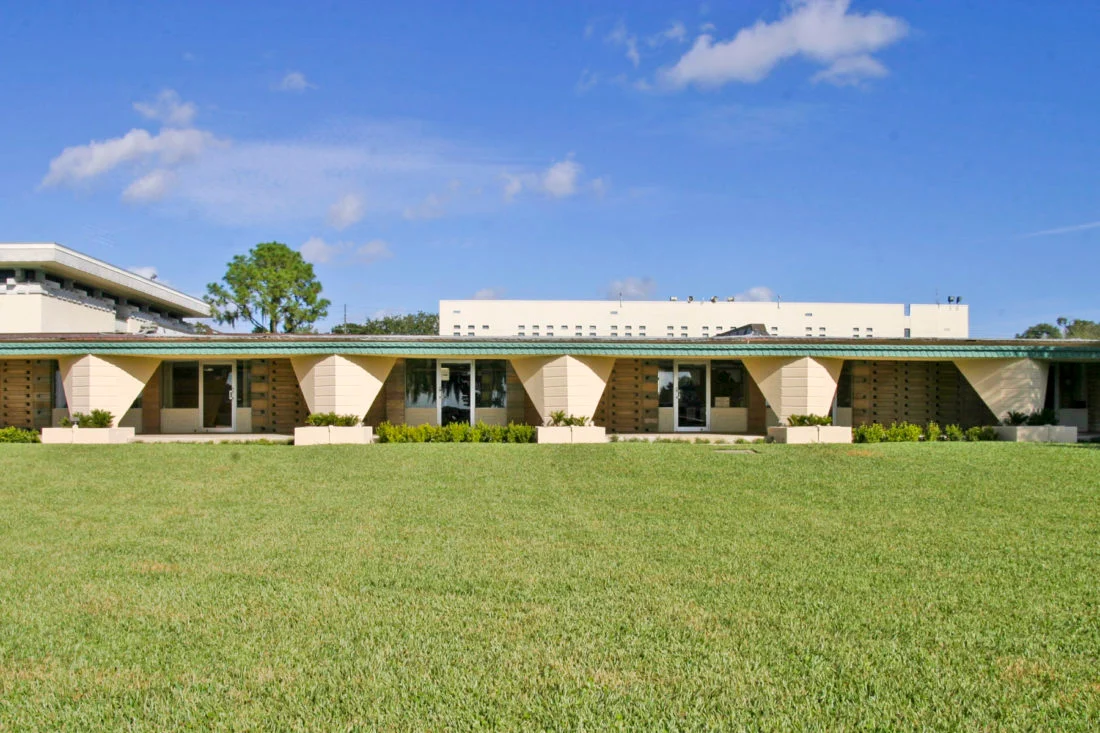
Charles W. Hawkins Seminar Building

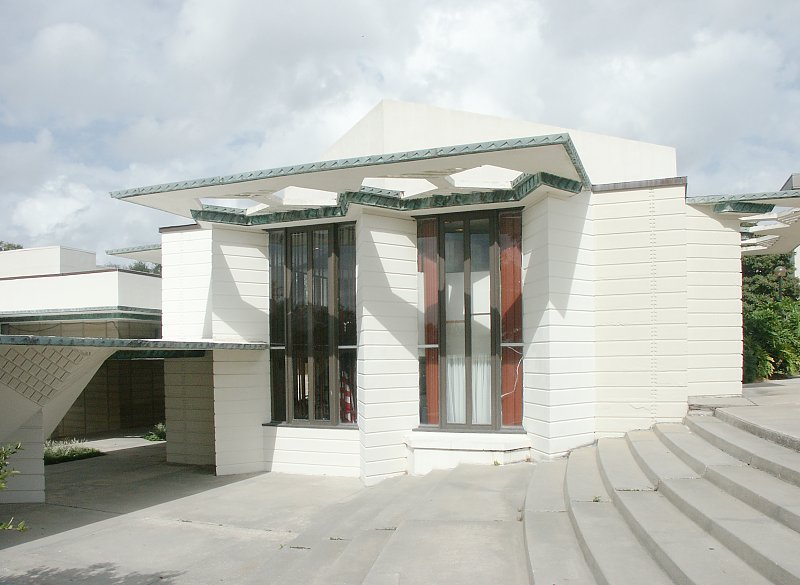
The southernmost seminar pavilion. Wright insisted every building reflect its environment 'through native materials all universally adapted to the uses of young life.' The triangular copper trim (turquoise from oxidation, brown from rust) was Wright's nod to art-deco filtered through Florida light.

Isabel Walbridge Seminar Building
7
1940–1941

Isabel Walbridge Seminar Building

The middle of the three seminar pavilions. Cantilevered roof lines and deliberately low ceilings. Wright kept the Esplanade just 6'8" tall so the open courtyards would feel monumental by contrast. Spivey paid Wright with a check that bounced for the first design; Wright sent the drawings anyway.

Cora Carter Seminar Building
8
1940–1941

Cora Carter Seminar Building

One of three identical pavilions Wright designed as small seminar rooms. The textile blocks were cast on site from sand dug out of the orange-grove subsoil; Wright wanted the buildings to literally come 'out of the ground and into the light, a child of the sun.' Now part of the Financial Aid and Business Office complex.

Annie Pfeiffer Chapel
9
1938–1941

Annie Pfeiffer Chapel

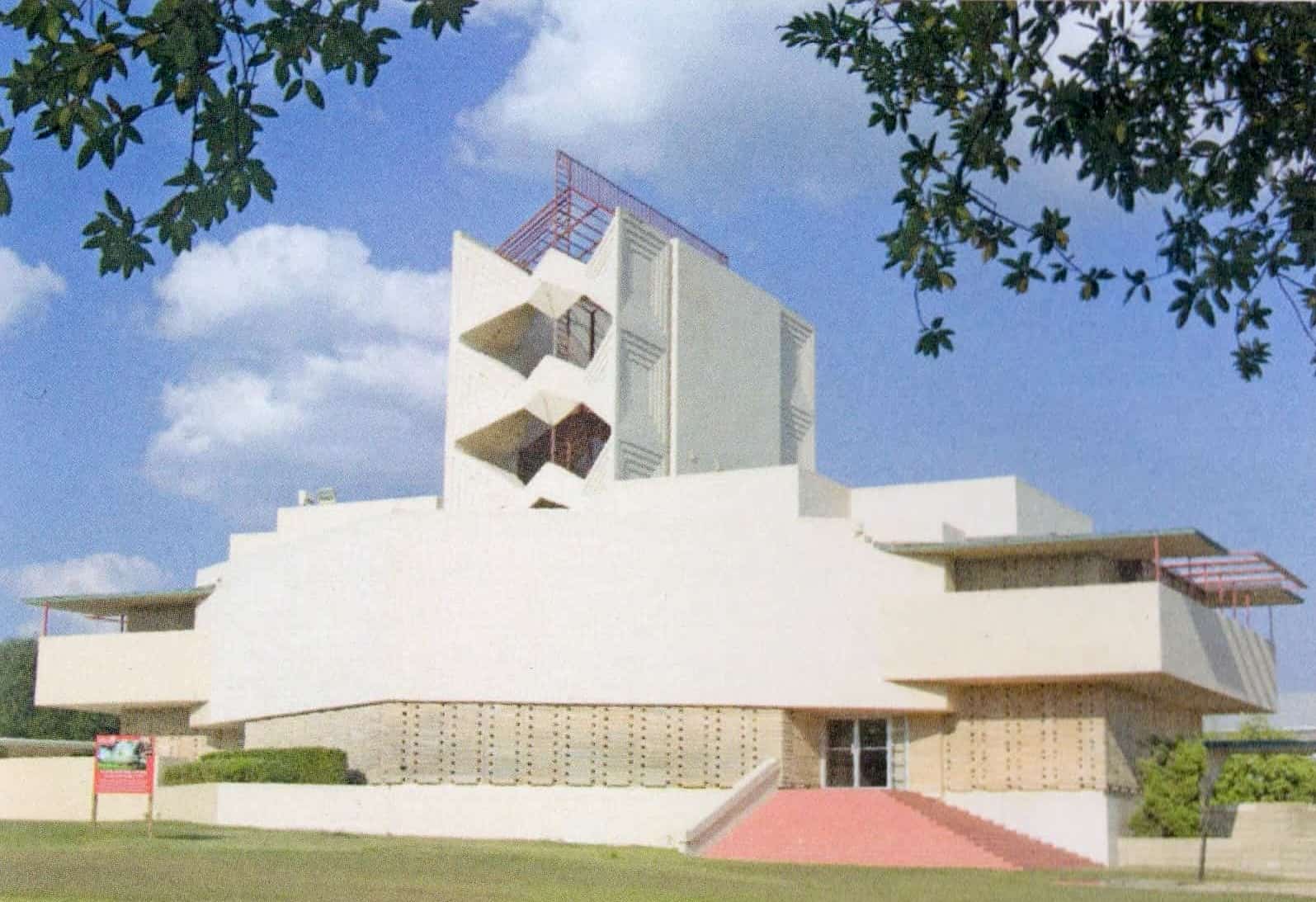
The first building completed and the campus icon. Wright told FSC president Ludd Spivey he wanted "a great education temple in Florida." The openwork concrete tower was nicknamed "the bicycle rack in the sky" by students. Small squares of colored glass are embedded in 6,000 textile blocks cast on site, many by students working off tuition during WWII. Go inside in late afternoon and watch the light move across the pews.

William H. Danforth Chapel
10
1954–1955

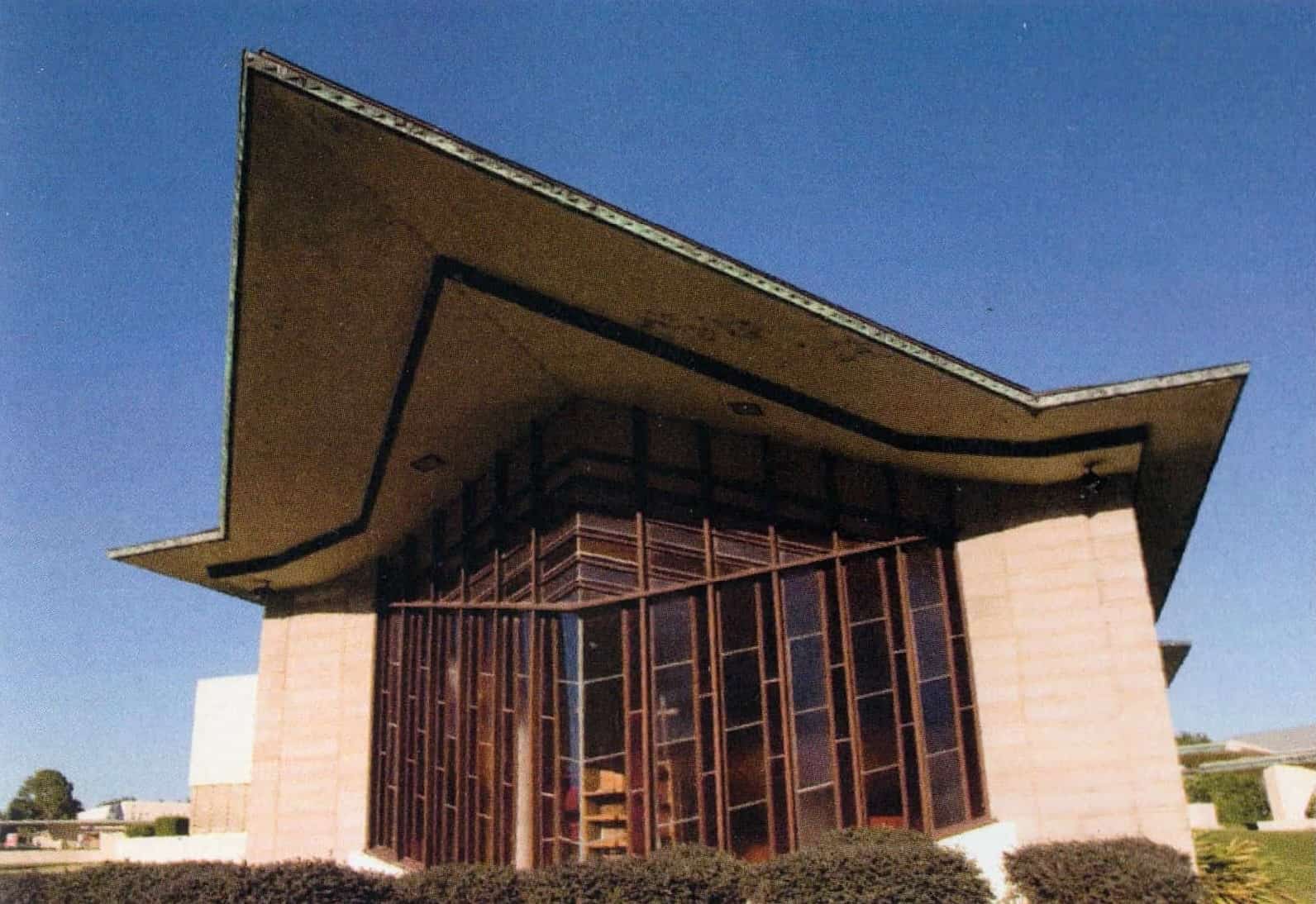
William H. Danforth Chapel

Small, intimate, often locals' favorite over the more famous Pfeiffer Chapel next door. Wright designed the orange-and-gold leaded-glass window, the pipe-organ enclosure, and the pews and cushions, all still in place. The peaked, projecting roof inspired the Hunt & Peckish blogger to call it 'the Flying Nun's habit in concrete.'

Polk County Science Building
11
1953–1958

Polk County Science Building

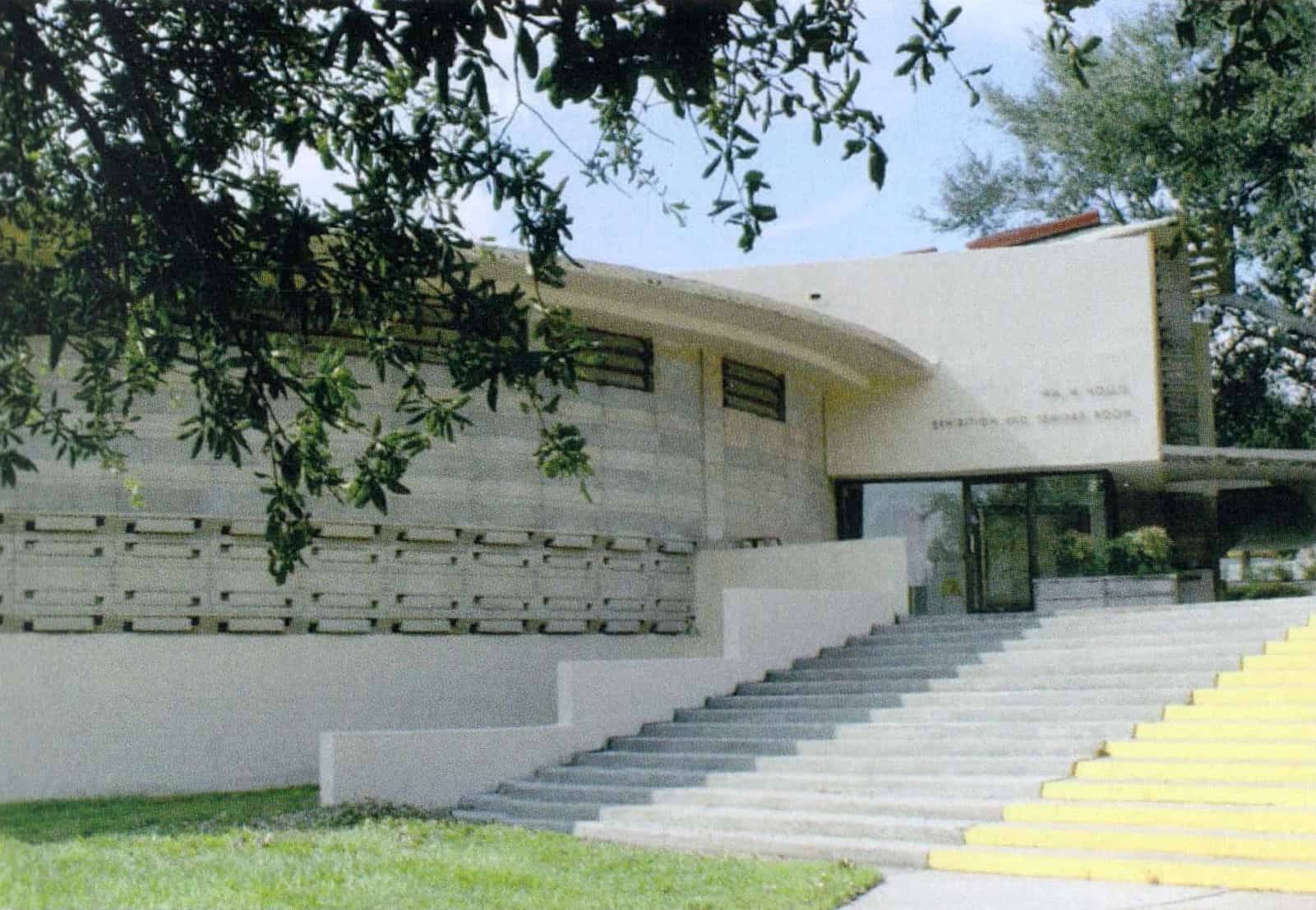
The last building Wright designed for the campus — completed the year before his death in 1959. Houses the only planetarium Frank Lloyd Wright ever designed. The roof is now crowded with fans and ductwork added to meet modern chem-lab safety standards (full air exchange every 45 seconds).

Lucius Pond Ordway Building (Industrial Arts)
12
1952

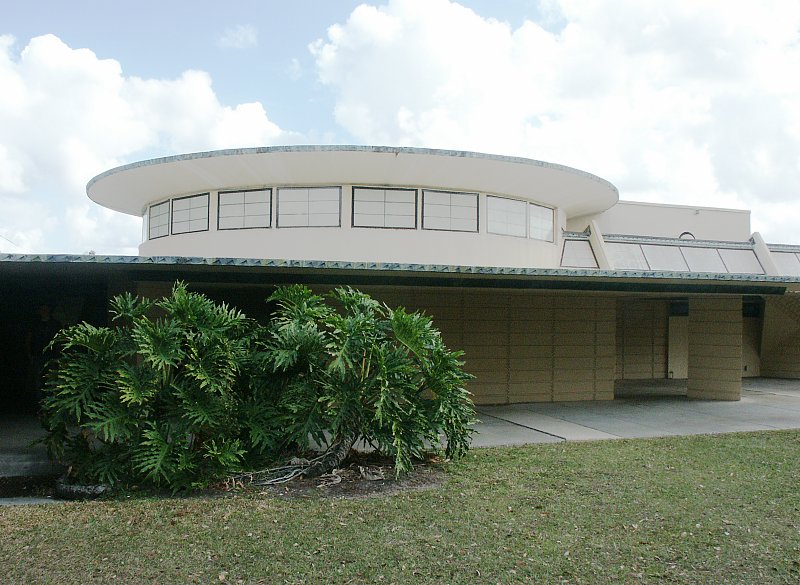
Lucius Pond Ordway Building (Industrial Arts)

Holds Wright's theater-in-the-round. The acoustics are uncanny: whisper along the wall and it's audible across the room, but the person standing at the center hears an echo no one else can hear. Originally the Industrial Arts Building; the interior courtyard is one of the few quiet spots on campus mid-day.

Usonian Faculty House
13
Designed 1939, built 2013

Usonian Faculty House

The 'new' Wright building. Designed in 1939 as affordable faculty housing for $5,000; FSC finally raised the money and built it in 2013, 54 years after Wright's death. The only Wright-designed Usonian in Florida. 6,000 hand-placed pieces of colored glass are embedded in the textile blocks. Separate $15 ticket and worth it: you're encouraged to sit in the Wright-designed chairs.

Tours & Tickets

  • Self-guided: $5 walking-tour map at the visitor center.
  • Usonian House tour: $15, ~1 hour with the video.
  • 90-minute guided campus tour: $35, goes inside three buildings.
  • 2-hour in-depth tour: $50, weekdays show the most interiors.
  • Behind the Scenes: $125, small group, off-limits spaces.

Reservations recommended: 863-680-4597 or fllw@flsouthern.edu. Open daily except Thanksgiving, Christmas, and New Year's Day.

Book official guided tours on FSC's site ↗FSC's official Wright site ↗

Visitor Tips

  • Best time of day: Late afternoon: the chapel glass lights up around 4–5 PM, and the heat eases.
  • Best season: October through April. Summer is hot.
  • Water Dome: Runs on a posted schedule a few hours a day to conserve water; check before you go.
  • Esplanade: Just 6'8" tall in places. Tall folks, mind your head.
  • Bring: Water, a hat, a real camera if you have one: the textile blocks reward close-ups.
  • Pair it with: Coffee at Concord or Black & Brew, lunch at Peach House, a loop around Lake Morton on the way back.

Stay one block away

Swan Suites — walking distance to FSC

Three historic short-term rentals one block from the Frank Lloyd Wright campus, between Lake Morton and Lake Hollingsworth.